
Dog Training Leicestershire Educational Blogs

Speaking "Dog": How to Read the Signs and Prevent Dog Bites
Speaking "Dog": How to Read the Signs and Prevent Dog Bites
Here at Rovers Return Dog Training & Behaviour, Leicestershire, we believe that most dog bites aren't caused by "bad" dogs—they are caused by a breakdown in communication.
Dogs are incredibly expressive animals, but they don't speak human. When they are stressed, uncomfortable, or frightened, they use body language and their voice (barking and growling) to ask for space.
If we miss or ignore those signs, they are forced to use the only definitive tool they have left: their teeth.
Preventing dog bites is all about education. Today, we’re sharing some vital, life-saving advice on how to understand man’s best friend, how to safely approach (or not approach) dogs, and what to do in an emergency.
What Are The Statistics On Dog Bites?
The Reality: UK Dog Bite Statistics
It’s easy to think, "It won't happen to me," or "My family dog would never." However, the data tells a different story. Dog bite incidents across the UK have risen sharply over recent years.
Hospital Admissions: In England alone, hospital admissions for dog bites topped 10,600 in a single year (2023/24).
The Adult Trend: While we often worry most about children, NHS data shows that the sharpest increase in dog bite injuries over the last generation has actually been among adults.
Close to Home: Approximately 70% of dog bites occur in the home environment, usually involving a family pet or a dog well-known to the victim.
These numbers aren’t meant to scare you; they are a wake-up call. We need to do better at understanding what dogs are trying to tell us.
How can you stop a dog from biting you?
1. Ditch the "Hand Out" Myth
We have all been told at some point: "Put your hand out, so the dog can sniff you."
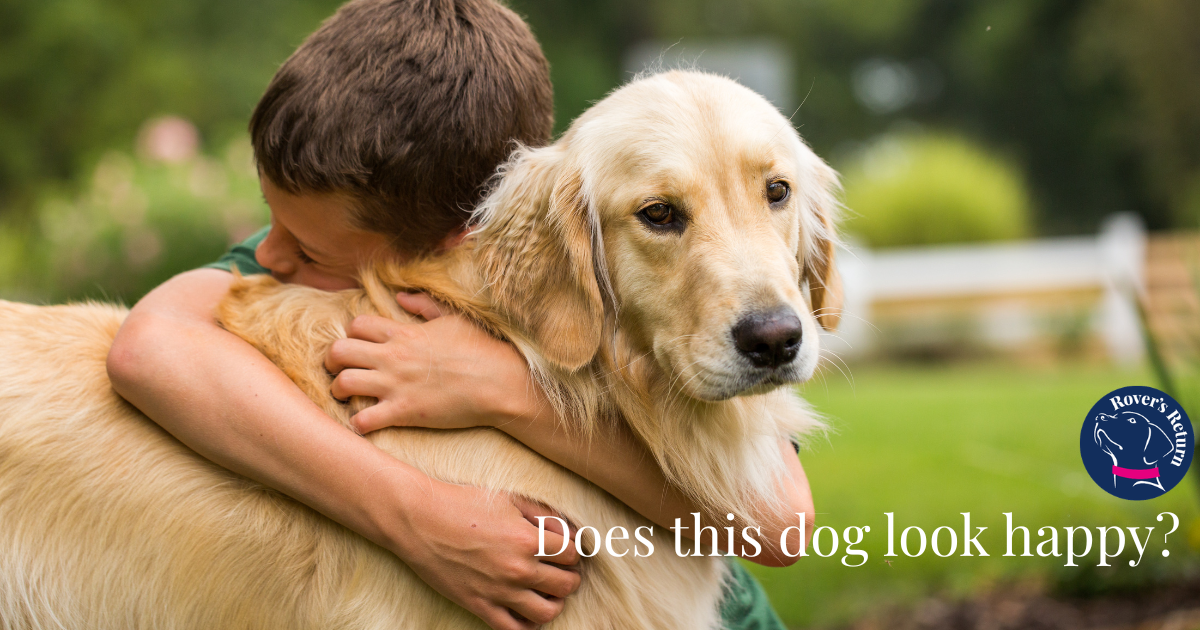
From a dog’s perspective, a human walking directly toward them and shoving an open hand right into their face isn’t polite—it’s confrontational and threatening. If a dog is already nervous or guarding its space, an outstretched hand looks like a weapon or an invasion of privacy, which can trigger a defensive snap.
We have found that initially, dogs like to sniff around your feet.
What to do instead:
Let the dog's nose do the work from a distance. Keep your hands relaxed at your sides. If the dog wants to interact, they will choose to cross the distance to sniff your shoes or legs. If they stay back, respect their choice. Ignored dogs are safe dogs.
2. How to Safely Approach an Unknown Dog
If you see a dog out and about in Leicestershire and want to say hello, always follow the A-B-C method:
A – Ask the Owner: Always ask permission first. Never assume a dog is friendly just because it looks cute or is wagging its tail (a wagging tail can sometimes mean high arousal or anxiety, not happiness!).
B – Body Language Check: Look at the dog. Is it cowering? Are its ears pinned back? Is it freezing and staring intensely? Is the body stiff? If you see any of these signs, do not approach, even if the owner says it’s okay.
C – Curve Your Approach: In the canine world, walking in a straight, direct line toward someone is aggressive. Approach at a slight angle, stand sideways to the dog (which is far less threatening than facing them head-on), and let them make the final move.
3. What to Do If an Unknown Dog Approaches You
It can be terrifying if a loose, unknown, or potentially aggressive dog approaches you while you’re out for a walk. The natural human instinct is to scream, wave our arms, or run away. Do not do this. Running activates a dog’s predatory chase drive, turning a curious dog into a chasing dog.
Instead, teach your children and practice yourself the golden rule: Be like a tree.
How to "Be Like a Tree"
If an unfamiliar dog approaches you aggressively or too quickly:
Stop Moving: Stand completely still.
Freeze exactly where you are. Plant your feet firmly into the ground like roots.
Fold Your Branches:Tuck your arms over your chest.
Bring your hands in close to your body, crossing your arms or folding your hands under your chin. Do not wave your hands around.
Look at the Ground: Avoid eye contact.
Do not stare at the dog. In dog language, direct eye contact is a challenge. Watch your feet or look at the ground.
Stay Quiet: Be completely boring.
Do not scream or shout. Wait quietly until the dog loses interest and moves away, or until help arrives.
4. Recognizing the "Ladder of Aggression"
Dogs rarely bite unexpected, without any warning signs. More often, humans misread and ignore the communication that dogs are showing. They use a series of subtle signals first. If we ignore the subtle signs, they have to get louder.
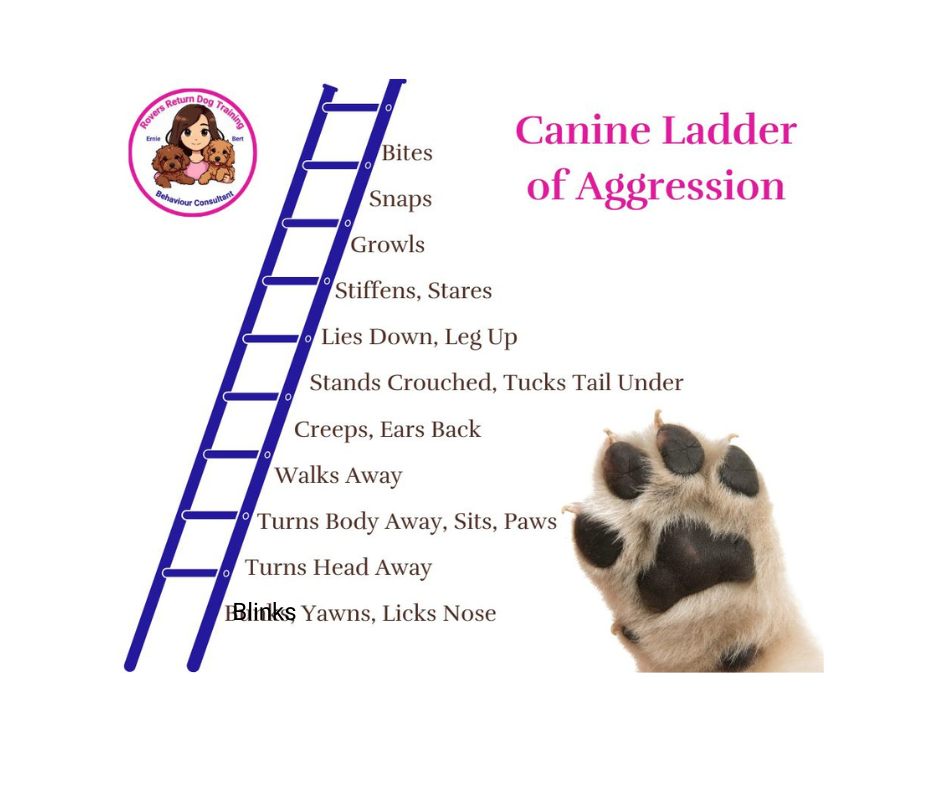
Body Language Is Communication, You Just Need To Understand What They are Saying
Licking lips, yawning, blinking, means that I am feeling a bit stressed/uncomfortable.
Turning head away, walking away -Please leave me alone, I need space.
Tucking tail, pinning ears back - I am frightened.
Freezing, stiffening body, growling - Back off right now, or I will defend myself.
By changing how we interact with dogs, we can dramatically reduce the risk of bites and build safer, happier communities across Leicestershire.
What dog breeds are more prone to biting?
While we often look to data for answers, current UK records on dog bites lack crucial details—most notably, the breed of the dog involved is rarely documented. This means there is no definitive statistical evidence proving one breed is inherently more likely to bite than another.
The reality is that any dog, regardless of its breed, is capable of biting under the right circumstances. A dog's breed is only a small piece of the behavioural puzzle; genetics, early socialization, health, pain levels, and the immediate environment play a far more significant role in how a dog reacts.
Sam, head trainer at Rover's Return Dog Training & Behaviour, is a certified dog bite educator
Highly Qualified Behaviourist
Accredited by APDT, ABTC and UK DOG Behaviour and Training Charter
Accredited Scentwork Instructor
Force Free Trainer and Behaviour
Force Free Trainer and Behaviour
Accredited Scentwork Instructor
Accredited by APDT, ABTC and UK DOG Behaviour and Training Charter
Highly Qualified Behaviourist
Contact Us
You can contact us via Live Chat button at the bottom of the screen or the contact box to the right.
You can also book one of our services online using the View Dates buttons under the service you require.
1. Introduction
These terms and conditions govern your use of the https://www.dogtrainingleicestershire.co.uk/ website ("the Website"), owned and operated by Rovers Return Dog Training And Behaviour ("the Company"). By accessing or using the Website, you agree to be bound by these terms and conditions. If you do not agree with any part of these terms and conditions, please refrain from using the Website.
2. Services Offered
The Website provides information and advertisement for various pet care services, including dog training, doggy daycare, overnight boarding, grooming, and behaviour modifications.
3. Use of the Website
(a) Age Requirement: The Website is intended for individuals who are at least 18 years old. If you are under 18, you may only use the Website with the consent and supervision of a parent or legal guardian.
(b) Account Registration: In order to access certain features or services on the Website, you may be required to create an account. You agree to provide accurate and complete information during the registration process and to keep your account credentials confidential. You are solely responsible for any activity that occurs under your account.
(c) User Conduct: You agree to use the Website in compliance with applicable laws and regulations. You shall not engage in any activities that may disrupt or interfere with the proper functioning of the Website or infringe upon the rights of others.
4. Privacy and Data Protection
(a) Collection and Use of Personal Information: When contacting or purchasing services through the Website, you may be required to provide personal information. Such information will be collected, stored, and processed by Rovers Return Dog Training And Behaviour or its designated third-party service provider, LeadConnector, in accordance with their respective privacy policies.
(b) Privacy Policy: For more information on how your personal information is collected, used, and protected, please refer to the Privacy Policy available on the Website.
5. Intellectual Property
(a) Ownership: All content on the Website, including but not limited to text, images, logos, and trademarks, is the intellectual property of Rovers Return Dog Training And Behaviour or its licensors. You may not use, reproduce, modify, or distribute any of the content without prior written consent from the Company.
(b) User-Generated Content: If the Website allows users to post content, you agree not to submit any content that is unlawful, offensive, or infringing upon the rights of others. By posting content on the Website, you grant the Company a non-exclusive, royalty-free, perpetual, and worldwide license to use, display, modify, and distribute the content.
6. Limitation of Liability
To the extent permitted by law, the Company shall not be liable for any direct, indirect, incidental, consequential, or punitive damages arising out of or in connection with the use of the Website or the services offered through it.
7. Governing Law and Jurisdiction
These terms and conditions shall be governed by and construed in accordance with the laws of the United Kingdom. Any disputes arising out of or relating to these terms and conditions shall be subject to the exclusive jurisdiction of the courts of the United Kingdom.
8. Modifications to the Terms and Conditions
The Company reserves the right to modify these terms and conditions at any time without prior notice. It is your responsibility to review the terms and conditions periodically to stay informed about any changes.
© 2023 by Rovers Return Dog Trainers Academy - Force Free Dog Training Lutterworth, Broughton Astley, Leicestershire, Hinckley, Nuneaton, Stoney Stanton, South Kilworth, Ullesthorpe
Facebook
Instagram
X
LinkedIn
Youtube
TikTok