Book a FREE 1:1 Consultation Call By Clicking HERE
Free, no-pressure chat to understand your dog and outline a tailored plan.
Dog Training Leicestershire Educational Blogs

Can You "Reward" Fear In Dogs? The Biggest Myth in Dog Behaviour Training
Can You "Reward" Fear In Dogs?
The Biggest Myth in Dog Behaviour Training

At Rovers Return Dog Training and Behaviour Leicestershire, we hear it all the time: "If I pet my dog or give them a treat when they’re shaking from a firework or growling at a stranger, won't I be telling them it’s okay to be scared? Won't I make the fear worse?"
It is time to bust this myth once and for all.
You cannot reinforce an emotion. Fear is an involuntary physiological response—not a chosen behaviour. Understanding this distinction is the key to helping your dog navigate a world that sometimes feels very scary to them.
What are signs of fear in a dog?
There are many signs that dogs are fearful. According to VCA hospital blog ‘fears and phobia’s in dogs https://vcahospitals.com/know-your-pet/fears-and-phobias-in-dogs---animals-and-people
‘Fear is associated with classic behaviours: fight, flight, freeze, and fidget. When introduced to a stranger or new animal, a fearful dog may cower, roll onto her back, look away, tuck her tail, lick her lips, tremble, pant, or try to hide behind you. If the threat remains close, and she cannot escape, she may snap or lunge (fight). Some dogs raise their hackles (hair on their back) when they are frightened.
Fearful dogs often stiffen to indicate their discomfort during social interactions such as greetings. For example, your dog may stiffen (freeze) when a person begins to pet her or when another dog sniffs her. In fact, a stiff posture may be your dog’s attempt to communicate her desire to end the interaction. If the interaction continues (the person keeps petting or the other dog keeps sniffing), your dog could spring up and run away (take flight) or growl and snap (fight).
Fear is a Feeling, Not a Function
How To Get A Dog To Overcome Fear
Think of it this way: If you are terrified of spiders and someone gives you a piece of chocolate while a tarantula is in the room, do you suddenly become more afraid of spiders?
Of course not. You might still be scared, but the chocolate (a positive thing) starts to create a tiny, microscopic bridge toward feeling better.
Reinforcement applies to operant behaviours (like "Sit" or "Stay"). Fear is classical conditioning. When you comfort a scared dog, you aren't "rewarding" the shaking; you are providing safety. By comforting them, you are helping their nervous system shift from "Fight or Flight" back into "Rest and Digest."
Why "Feeding the Fear" is Exactly What They Need
When your dog is anxious, their brain is flooded with cortisol and adrenaline. By offering high-value food or calm physical touch, you are performing Counter-Conditioning.
Changing the Association: You are teaching the brain that Scary Thing = Yummy Chicken.
The Safety Signal: Your calm presence and soothing voice act as an "Anchor." If you ignore a scared dog, they feel vulnerable and alone, which actually increases their anxiety.
The Rover's Return Rule: You can never give too much love to a dog who is struggling. If they need to hide behind your legs, let them. If they need to be held, hold them. You are their protector.
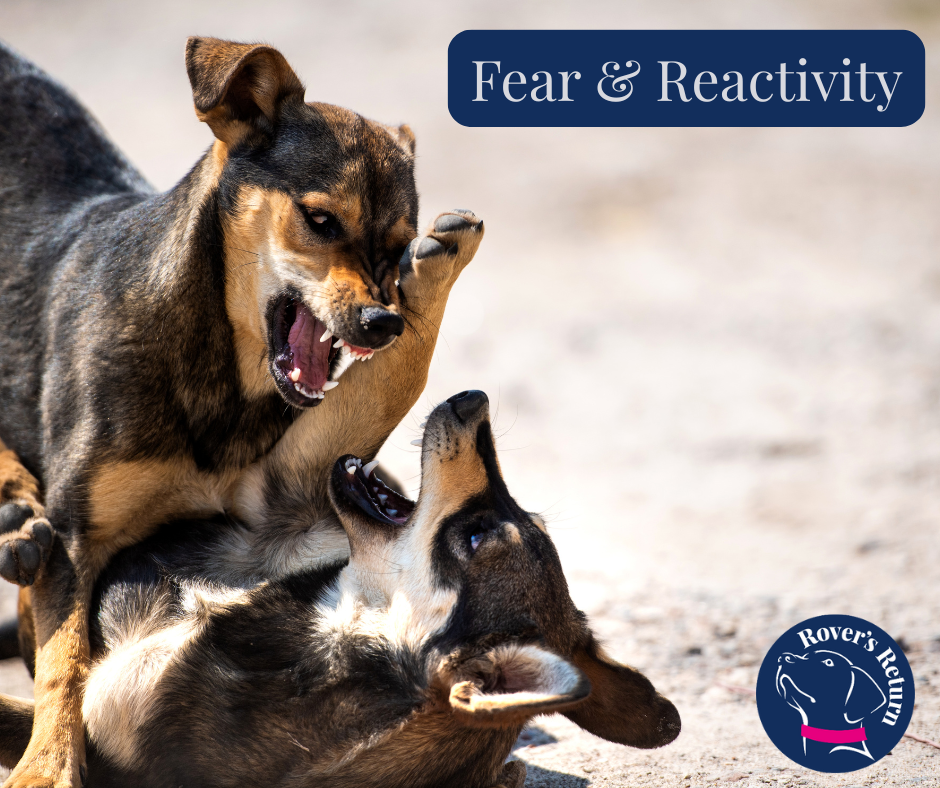
"My Dog Won't Take the Food!" (The Shut-Down Point)
We often see owners get frustrated when their dog refuses a prime piece of steak during a walk. Owners think, "He’s just being stubborn" or "He's too focused on that other dog."
The truth is more scientific: Their digestive system has shut down.
When a dog (like our friend Zorro) reaches a certain level of fear, the "Survival Brain" takes over. The body diverts all blood flow away from the stomach and toward the heart and muscles.
Physiological Block: At this point, the dog physically cannot eat.
The Lesson: If your dog won't take food, they are over-threshold. They aren't being "naughty"; they are in a state of sheer panic.
The Solution? Distance. Move away until the "Survival Brain" clicks off, and they can accept a treat again. That is their "Safety Zone."
Summary: Comfort is a Compass
What is "I love you" in dog language?
At Rovers Return, we believe training should be rooted in empathy.
Comfort your dog. You aren't making them "weak" or "spoiled."
Use high-value food. It changes the emotional "weather" in their brain.
Respect the "No." If they won't eat, they are telling you the situation is too much. Listen to them and move to a safer distance.
Building a relationship based on trust means being the person your dog can turn to when the world gets loud.
Is your dog struggling with "big feelings" or reactivity? Contact Rovers Return Dog Training and Behaviour today to start building your dog's confidence from the ground up.

Highly Qualified Behaviourist
Accredited by APDT, ABTC and UK DOG Behaviour and Training Charter
Accredited Scentwork Instructor
Force Free Trainer and Behaviour
Force Free Trainer and Behaviour
Accredited Scentwork Instructor
Accredited by APDT, ABTC and UK DOG Behaviour and Training Charter
Highly Qualified Behaviourist
Contact Us
You can contact us via Live Chat button at the bottom of the screen or the contact box to the right.
You can also book one of our services online using the View Dates buttons under the service you require.
© 2023 by Rovers Return Dog Trainers Academy - Force Free Dog Training Lutterworth, Broughton Astley, Leicestershire, Hinckley, Nuneaton, Stoney Stanton, South Kilworth, Ullesthorpe
Privacy Policy | Terms and Conditions | Terms and Conditions of Services | Sitemap
Facebook
Instagram
X
LinkedIn
Youtube
TikTok