
Dog Training Leicestershire Educational Blogs
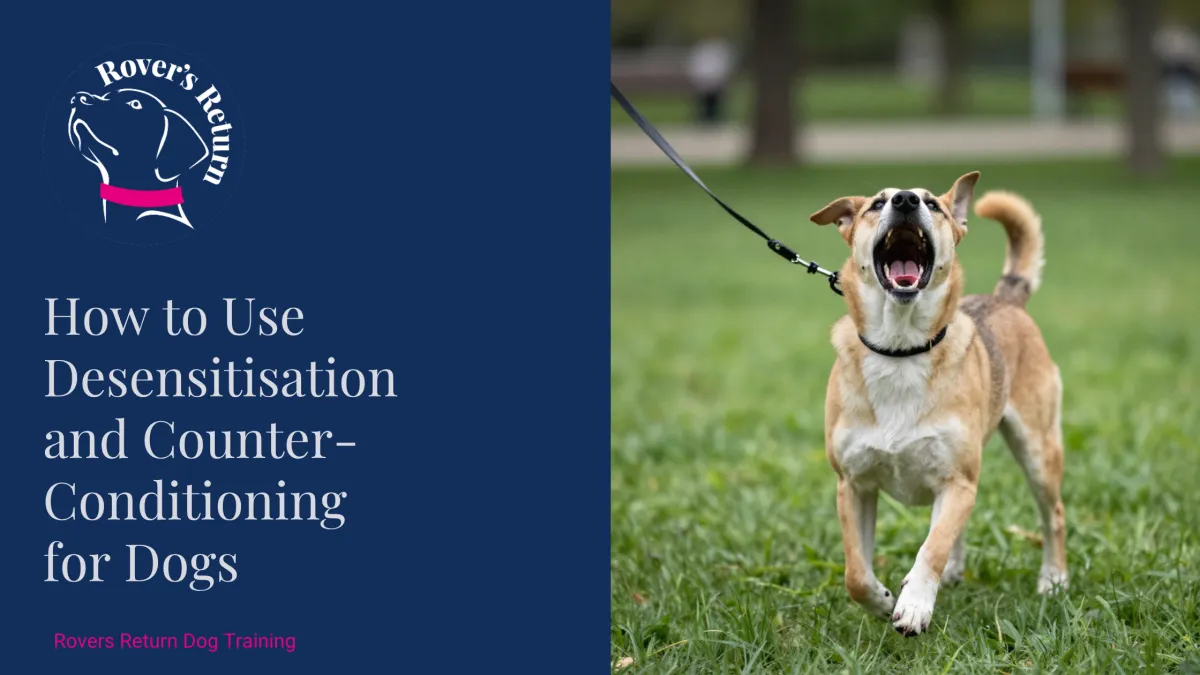
Counter Conditioning for Reactive Dogs
Dog Training Methods, Behaviour Modification, Pet Anxiety Solutions
Counter Conditioning and Desensitization for Reactive Dogs: A Behaviour Expert’s Guide
As a canine behaviour specialist who works every day with reactive dogs and their families, I’ve seen how overwhelming reactivity can feel. The good news: when we break things into clear steps and focus on emotions first, Counter Conditioning and Desensitization Techniques become practical tools any dedicated guardian can learn. This post translates these gold-standard Dog Training Methods into a calm, structured Behaviour Modification plan for real-life Pet Anxiety Solutions.
Understanding Reactive Behaviour as an Emotional Safety Response
Reactive Behaviour—lunging, barking, growling on leash—is usually not “bad manners.” It’s your dog’s nervous system sounding the alarm when it sees a trigger: another dog, a skateboard, a stranger. Effective Pet Anxiety Solutions don’t simply shut that alarm off; they help your dog feel safer so the alarm doesn’t need to sound in the first place. That’s where Counter Conditioning and Desensitization Techniques come in as core Behaviour Modification tools for reactive dogs.
📌 Key Takeaway: At Paws & Patterns, we look at reactivity as an emotional safety issue, not a “stubbornness” problem. When we change how a dog feels about a trigger, the behaviour follows. For a deeper dive into this mindset, explore our guide on understanding reactive dog behaviour, and pair it with our step-by-step walkthrough on counter conditioning for reactive dogs. You can also read more about why this happens in our extended article, why is my dog reactive to other dogs?. For local, real-world support, you may also find our piece on dealing with a reactive dog in Leicestershire especially helpful.
Counter Conditioning: Rewriting Emotional Associations
Counter Conditioning means pairing the scary thing with something your dog absolutely loves until their emotional response flips. Think: “other dog appears” → “chicken rain begins.” Over time, the trigger predicts good stuff instead of panic. The key is that the trigger must be present but not overwhelming—otherwise your dog can’t learn, only react.
💡 Pro Tip: Use high-value rewards your dog doesn’t get any other time. If kibble is your unit test, fresh chicken is your production-grade reward. For more context on how this plays out around unfamiliar dogs, you may find it helpful to review why is my dog reactive to other dogs?
Real-life success stories from my clients
“From sidewalk meltdowns to quiet passes” – Milo’s story
Milo, a two-year-old cockapoo, used to explode at every dog within 20 metres. His guardian, Sarah, dreaded walks and had started going out only after dark. We began with counter conditioning at a distance where Milo could still eat and look back at Sarah when she spoke. For two weeks, their only “goal” was: dog appears = chicken party, then leave. No cues, no pressure to “be good.”
By week four, Milo could calmly watch dogs across a wide park path while snacking and occasionally sniffing the grass. At the eight-week mark, Sarah messaged me: “We just passed three dogs on our street with no barking. He glanced, looked back at me, and we kept walking. I actually enjoyed our walk for the first time in months.”
“The skateboard gauntlet” – Luna’s story
Luna, a sensitive border collie, would spin, bark, and lunge when she heard skateboards, even if she couldn’t see them yet. Her family lived near a busy park path, so avoidance wasn’t realistic. We built a sound hierarchy—recordings at low volume, distant real-life skateboards, then closer passes—and paired every single exposure with soft cheese and distance she could cope with.
After several weeks of short, structured sessions, Luna could lie on a blanket at a distance, calmly chewing a stuffed Kong while skateboards rolled past. Her guardian told me, “I used to plan our whole day around avoiding that path. Now we can sit there and relax together. She still notices the noise, but it doesn’t own her anymore.”
These are not overnight transformations, but they are absolutely achievable with patient, well-planned counter conditioning and desensitization.
Desensitization Techniques: Controlling Intensity Like a Config File
Desensitization Techniques are about adjusting the “volume” of the trigger so your dog stays under threshold—aware but not exploding. You tweak distance, duration, and movement like configuration values. At each level, you pair the trigger with rewards (Counter Conditioning) until your dog stays relaxed, then you gently increase difficulty.
Obviously, you’re not running this Python in the park, but treating your sessions like iterations—adjusting “trigger_distance” based on calm vs. reactive behaviour—mirrors how good Dog Training Methods work in real life.
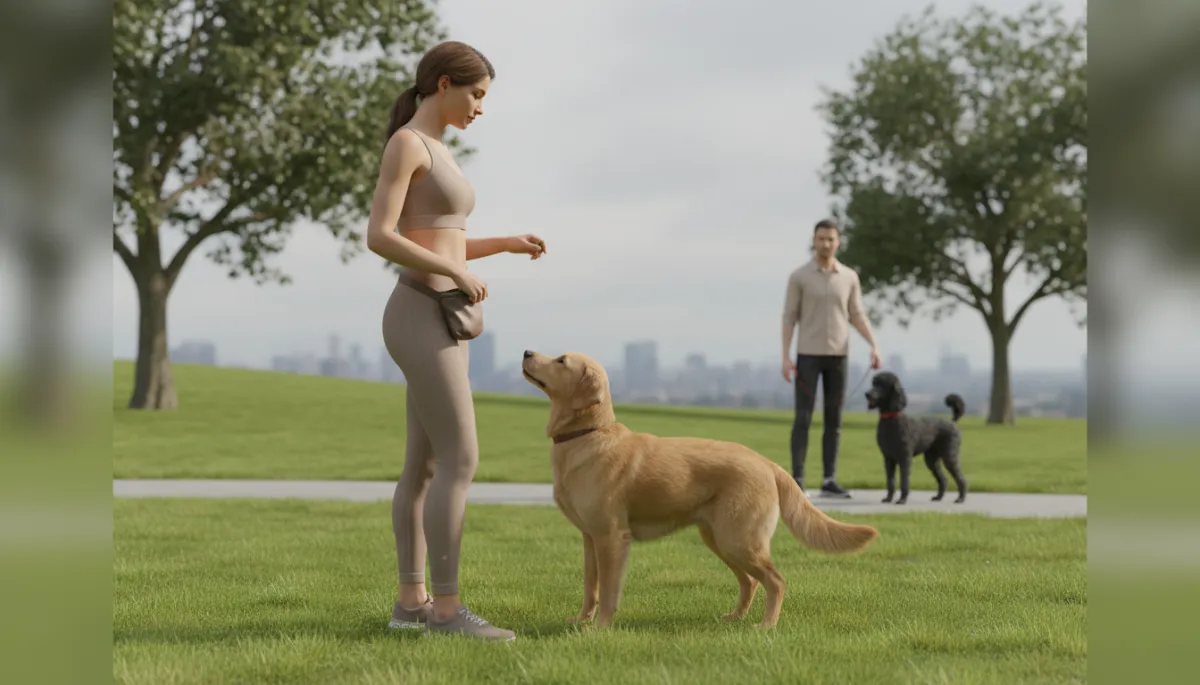
Working at a safe distance lets the dog learn instead of simply reacting.
A Practical Step-by-Step Behaviour Modification Plan
Define the trigger. Is your dog reactive to other dogs, bikes, or people with hats? Get specific so your “function” has clear inputs. If other dogs are the main concern, you may want to read why is my dog reactive to other dogs? alongside this plan.
Find threshold distance. Slowly approach a trigger and note where your dog first tenses, stares, or stops taking food. Then back off to an easier distance.
Pair trigger with rewards. At that safe distance, every time the trigger appears, feed rapid-fire treats until it’s gone. That’s Counter Conditioning in action.
Iterate gradually. Over multiple sessions, reduce distance or increase exposure only if your dog stays loose, can eat, and can respond to simple cues.
Log sessions. Treat it like monitoring: jot down distance, trigger type, and your dog’s response to track progress and adjust your Behaviour Modification plan.
Final Thoughts: Small, Consistent Changes for Big Emotional Shifts
Counter Conditioning and Desensitization are not quick patches; they’re long-term refactors of your dog’s emotional system. For sustainable Pet Anxiety Solutions, prioritize consistency over intensity: short, frequent sessions, always under threshold, always pairing the scary thing with something wonderful. And just as you’d seek a specialist for a complex health concern, don’t hesitate to consult a qualified behaviour professional for severe Reactive Behaviour—your dog’s emotional wellbeing is every bit as important as their physical health, and you don’t have to navigate it alone.
Ready for calmer walks with your dog? Book a free consultation call with Paws & Patterns to talk through your dog’s reactivity, ask questions, and map out a tailored Behaviour Modification plan that feels realistic for your daily life. We’ll help you decide the best next step for you and your dog—no pressure, just support.
Highly Qualified Behaviourist
Accredited by APDT, ABTC and UK DOG Behaviour and Training Charter
Accredited Scentwork Instructor
Force Free Trainer and Behaviour
Force Free Trainer and Behaviour
Accredited Scentwork Instructor
Accredited by APDT, ABTC and UK DOG Behaviour and Training Charter
Highly Qualified Behaviourist
Contact Us
You can contact us via Live Chat button at the bottom of the screen or the contact box to the right.
You can also book one of our services online using the View Dates buttons under the service you require.
1. Introduction
These terms and conditions govern your use of the https://www.dogtrainingleicestershire.co.uk/ website ("the Website"), owned and operated by Rovers Return Dog Training And Behaviour ("the Company"). By accessing or using the Website, you agree to be bound by these terms and conditions. If you do not agree with any part of these terms and conditions, please refrain from using the Website.
2. Services Offered
The Website provides information and advertisement for various pet care services, including dog training, doggy daycare, overnight boarding, grooming, and behaviour modifications.
3. Use of the Website
(a) Age Requirement: The Website is intended for individuals who are at least 18 years old. If you are under 18, you may only use the Website with the consent and supervision of a parent or legal guardian.
(b) Account Registration: In order to access certain features or services on the Website, you may be required to create an account. You agree to provide accurate and complete information during the registration process and to keep your account credentials confidential. You are solely responsible for any activity that occurs under your account.
(c) User Conduct: You agree to use the Website in compliance with applicable laws and regulations. You shall not engage in any activities that may disrupt or interfere with the proper functioning of the Website or infringe upon the rights of others.
4. Privacy and Data Protection
(a) Collection and Use of Personal Information: When contacting or purchasing services through the Website, you may be required to provide personal information. Such information will be collected, stored, and processed by Rovers Return Dog Training And Behaviour or its designated third-party service provider, LeadConnector, in accordance with their respective privacy policies.
(b) Privacy Policy: For more information on how your personal information is collected, used, and protected, please refer to the Privacy Policy available on the Website.
5. Intellectual Property
(a) Ownership: All content on the Website, including but not limited to text, images, logos, and trademarks, is the intellectual property of Rovers Return Dog Training And Behaviour or its licensors. You may not use, reproduce, modify, or distribute any of the content without prior written consent from the Company.
(b) User-Generated Content: If the Website allows users to post content, you agree not to submit any content that is unlawful, offensive, or infringing upon the rights of others. By posting content on the Website, you grant the Company a non-exclusive, royalty-free, perpetual, and worldwide license to use, display, modify, and distribute the content.
6. Limitation of Liability
To the extent permitted by law, the Company shall not be liable for any direct, indirect, incidental, consequential, or punitive damages arising out of or in connection with the use of the Website or the services offered through it.
7. Governing Law and Jurisdiction
These terms and conditions shall be governed by and construed in accordance with the laws of the United Kingdom. Any disputes arising out of or relating to these terms and conditions shall be subject to the exclusive jurisdiction of the courts of the United Kingdom.
8. Modifications to the Terms and Conditions
The Company reserves the right to modify these terms and conditions at any time without prior notice. It is your responsibility to review the terms and conditions periodically to stay informed about any changes.
© 2023 by Rovers Return Dog Trainers Academy - Force Free Dog Training Lutterworth, Broughton Astley, Leicestershire, Hinckley, Nuneaton, Stoney Stanton, South Kilworth, Ullesthorpe
Facebook
Instagram
X
LinkedIn
Youtube
TikTok