Book a FREE 1:1 Consultation Call By Clicking HERE
Free, no-pressure chat to understand your dog and outline a tailored plan.
Dog Training Leicestershire Educational Blogs
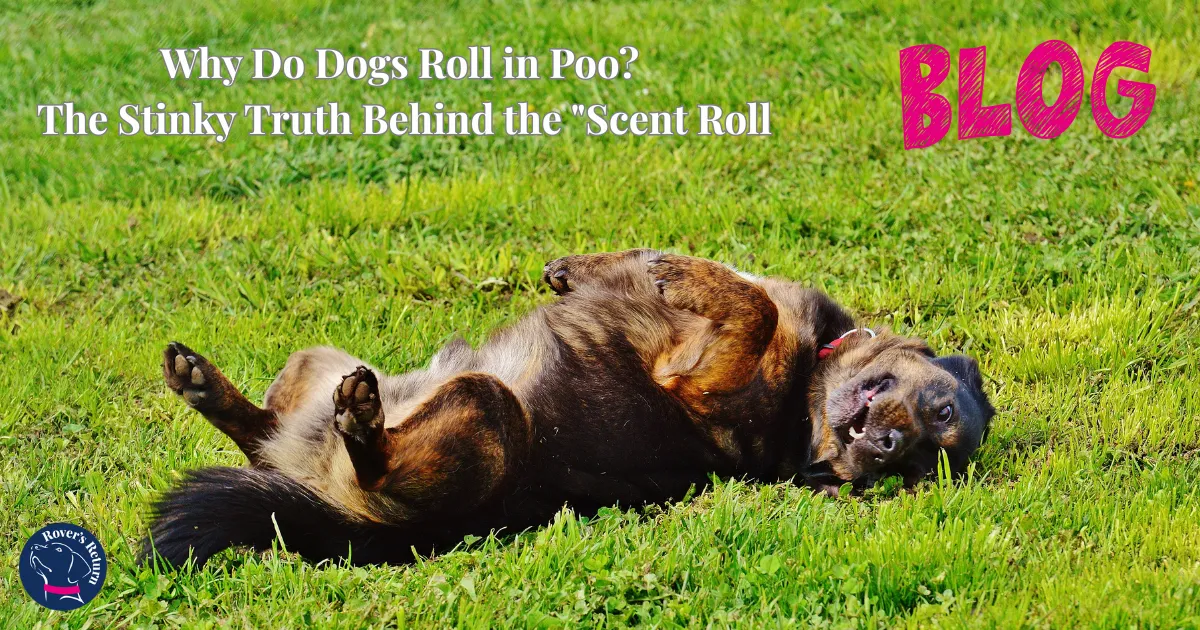
Why Dogs Roll in Stinky Things Like Poo
Why Do Dogs Roll in Poo?
The Stinky Truth Behind the Scent Roll
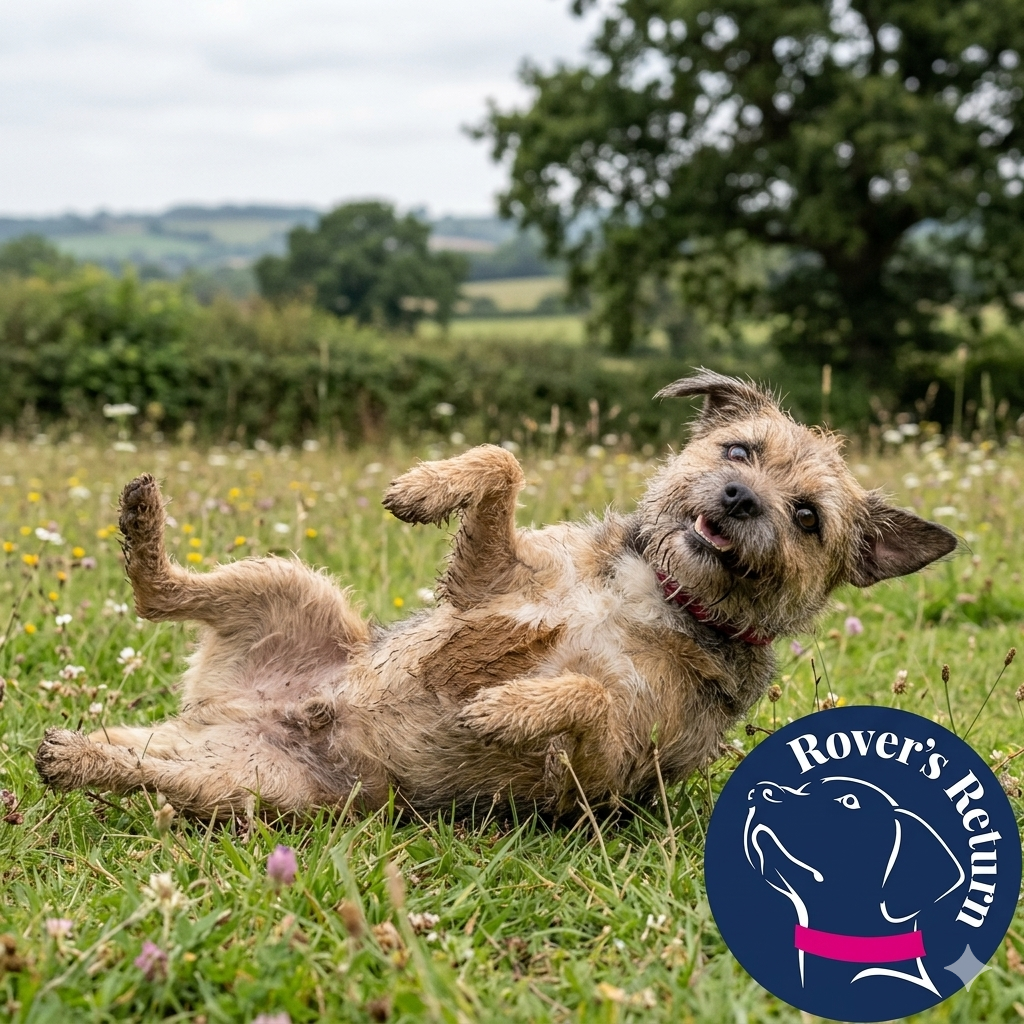
We’ve all been there. You’re enjoying a peaceful walk through the Leicestershire countryside, your dog is having the time of their life, and then it happens. The dreaded "shoulder drop." Within seconds, your freshly groomed companion is covered in something unmentionable—usually fox or cow muck or even worse, something dead!
At Rovers Return Dog Training and Behaviour, I often get asked: "Why on earth do they do it?" While it’s arguably the most frustrating canine habit, there are actually several fascinating, science-based reasons behind this stinky behaviour.
You are probably asking yourself
‘Why does my dog roll in poo and dead things, and how do I stop it?’
1. The Ancestral "Scent Camouflage"
Why Do Dogs Roll in poo all of a sudden?
One of the most common theories is rooted in evolution. Wild canids, such as wolves, may have rolled in the scent of prey or larger herbivores to mask their own "predator" smell.
The Advantage: By smelling like the environment (or the prey itself), a hunter could get closer to their target without being detected by a sensitive nose.
The Modern Dog: Even though your Dachshund or Rottweiler is waiting for their dinner bowl, that ancient hard-wiring to "blend in" remains strong.
2. An Ancient "Communication Board"
Think of a pile of fox poo as the canine version of a social media status update.
Information Sharing: Some researchers believe that by rolling in a scent, a dog is carrying information back to their pack.
The Message: "Look what I found!" By wearing the scent, they are telling other dogs where they’ve been and what’s happening in the local environment.
3. "Scent Branding" (The Perfume Effect)
While we find the smell of fox muck revolting, to a dog, it is high-end perfume.
The Dopamine Hit: Strong, pungent smells trigger a massive sensory reward in a dog’s brain.
Self-Expression: Some behaviourists suggest dogs roll in things they find "interesting" or "attractive" simply because they enjoy the intensity of the smell—much like we might choose a specific cologne.
How to Manage the "Stink"
How Do I Clean My Dog After Rolling in Poo?
While rolling is a natural, instinctual behaviour, it isn't very pleasant for the car ride home! Here is how to manage it using kind, fair, and effective methods:
Watch for the "Shoulder Drop": Most dogs have a tell-tale sign. They will sniff intently, then tilt their head to one side before dropping the shoulder. This is your window to use a "Check-in" or "Touch" cue to move them away.
Space & Management: If you know a particular field is a "hotspot" for fox activity, keep your dog on a long-line lead to prevent them from hitting their "emotional threshold" and diving in.
The Clean-Up: Always use a pH-balanced dog shampoo. Avoid using human perfumes to mask the smell afterward, as this can be overwhelming for their sensitive noses and may actually encourage them to go out and find a "better" smell to roll in again!
Final Thoughts
Rolling in poo is a perfectly normal, albeit gross, canine behaviour. It isn't a sign of your dog being "naughty"—it's a sign of them being a dog. By understanding their ancestral drives and keeping our eyes peeled for that "shoulder drop," we can keep the Leicestershire walks enjoyable for everyone.
Sam Hughes
Rovers Return Dog Training and Behaviour
ISCP. Adv.Canine.Prac, MAPDT 01528
Kind, Fair & Effective Training.
#DogtrainingLeicestershire #why do dogs roll in poo #scentrollingbehaviour #RoversReturnDogTraining #positivereinforcementLeicester #canine evolution #foxpoo #dogtraining.
Highly Qualified Behaviourist
Accredited by APDT, ABTC and UK DOG Behaviour and Training Charter
Accredited Scentwork Instructor
Force Free Trainer and Behaviour
Force Free Trainer and Behaviour
Accredited Scentwork Instructor
Accredited by APDT, ABTC and UK DOG Behaviour and Training Charter
Highly Qualified Behaviourist
Contact Us
You can contact us via Live Chat button at the bottom of the screen or the contact box to the right.
You can also book one of our services online using the View Dates buttons under the service you require.
© 2023 by Rovers Return Dog Trainers Academy - Force Free Dog Training Lutterworth, Broughton Astley, Leicestershire, Hinckley, Nuneaton, Stoney Stanton, South Kilworth, Ullesthorpe
Privacy Policy | Terms and Conditions | Terms and Conditions of Services | Sitemap
Facebook
Instagram
X
LinkedIn
Youtube
TikTok