Dog Training Leicestershire Educational Blogs
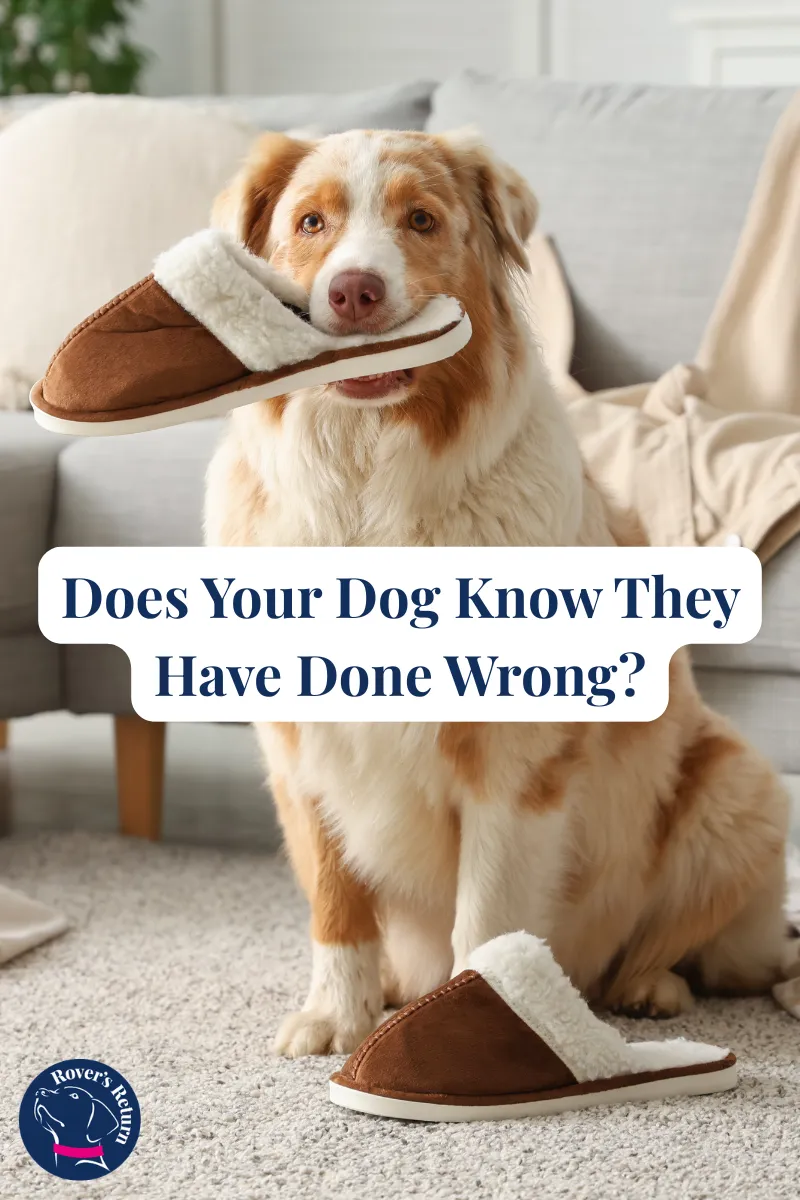
Does My Dog Know They’ve Been Naughty? The Science Behind the Guilty Look
Does My Dog Know They’ve Been Naughty? The Science Behind the Guilty Look
We’ve all walked into the kitchen to find a torn-up bin or a missing sandwich, or the dogs jumped on the bed when you have told them not to, only to be met by a dog with lowered ears, tucked tail, and "sad" squinty eyes. It’s the classic "guilty look."
As humans, we immediately project our own moral compass onto our dogs. We think, "They know exactly what they’ve done wrong!"
But does a dog actually have a concept of "right" and "wrong," or are we misreading a very different conversation?
Do dogs know if they've done something wrong?
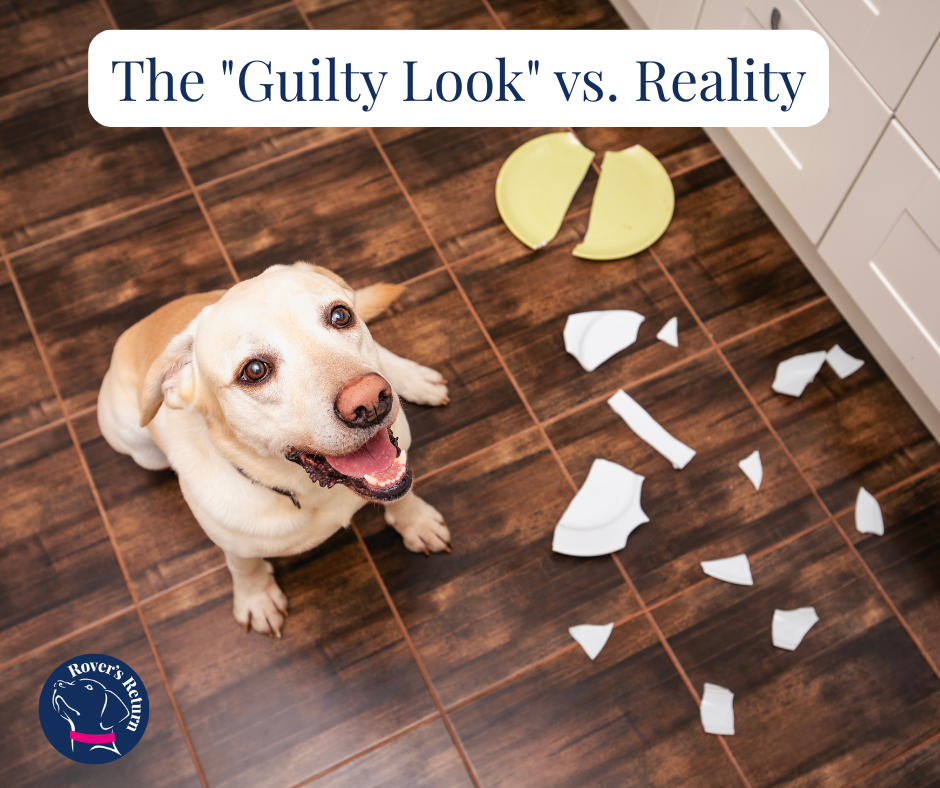
The "Guilty Look" vs. Appeasement
Research, most notably by cognitive scientist Alexandra Horowitz, has shown that what we call "guilt" is actually appeasement behaviour.
When a dog displays that sheepish look, they aren't reflecting on the bin they raided twenty minutes ago. Instead, they are responding to your current body language and emotional state.
Dogs can read our facial expressions, understand our mood and tell when we are happy or annoyed.
The Owner’s Influence
Dogs are masters of reading human micro-expressions. Before you’ve even said a word, your dog has sensed:
A change in your breathing or heart rate.
Stiffening of your shoulders.
A "hard stare" or a change in your vocal tone.
What does it mean when a dog looks guilty?
The "guilty look" is your dog’s way of saying, "I can see you’re upset, and I’m trying to de-escalate the situation so you don't hurt me or stay angry." In fact, studies prove that dogs will give the "guilty look" when they haven't done anything wrong, simply because their owner is speaking in an accusatory tone.
Different Brains: Why They Can't Judge "Right and Wrong"
To understand why dogs don't feel "guilt," we have to look at the architecture of the brain.
The Prefrontal Cortex
Humans have a highly developed prefrontal cortex, the area of the brain responsible for complex moral reasoning, future planning, and reflecting on the past. This allows us to think, "I shouldn't have eaten that cake; now I'll be in trouble later."
The Canine Focus
Dogs have a much smaller prefrontal cortex. Their brains are wired for the "Now." * The Action: The bin smells like chicken.
The Reward: Eating the chicken feels good (dopamine hit).
The Consequence: If the owner isn't there at that exact second, there is no "wrong."
For a dog, "right" and "wrong" are not moral categories; they are functional ones.
"Safe" = I can do this and nothing bad happens.
"Unsafe" = When I do this and my human is present, they make scary noises.
How Dogs Actually Judge Our Expectations
If they don't have a moral compass, how do they learn to behave? They use Pattern Recognition.
Your dog isn't thinking about "honesty" or "respect." They are judging the environment based on predictions:
The Context: "When the human is in the room, I don't touch the table."
The Absence: "When the human leaves, the 'Safe/Unsafe' rule changes because the trigger for the 'Unsafe' consequence (the owner) is gone."
This is why a dog might "behave" while you are watching, but "fail" the second you leave. It isn't spite or a lack of respect; it's simply that the rule they learned was attached to your presence, not to the object itself.
Changing the Narrative: From Guilt to Guidance
When we believe a dog is "guilty," we tend to react with frustration or punishment. This creates a cycle of Stress Stacking. The dog becomes more anxious because their owner is unpredictable, which leads to more "random" behaviours like chewing or barking as they try to soothe themselves.
What to do instead:
Remove the Prediction: If your dog raids the bin, don't wait for them to "look sorry." Simply manage the environment (use a locked bin) so they can't practice the behaviour.
Address the Emotion: If your dog is "naughty" when you are out, it's often a sign of high arousal or separation anxiety—not a moral failing.
Reward the Right: Focus on rewarding the "calm" moments. If they are sitting on their mat while you cook, that is where the "Right/Wrong" learning actually happens.
The Verdict
Your dog loves you deeply, but they aren't capable of sitting in a corner feeling "guilty" about your slippers. They are simply reacting to the person they love most in the world—you.
Next time you see that "guilty" look, take a breath, lower your own stress, and ask: "How can I make the 'right' choice easier for them next time?"
Highly Qualified Behaviourist
Accredited by APDT, ABTC and UK DOG Behaviour and Training Charter
Accredited Scentwork Instructor
Force Free Trainer and Behaviour
Force Free Trainer and Behaviour
Accredited Scentwork Instructor
Accredited by APDT, ABTC and UK DOG Behaviour and Training Charter
Highly Qualified Behaviourist
Contact Us
You can contact us via Live Chat button at the bottom of the screen or the contact box to the right.
You can also book one of our services online using the View Dates buttons under the service you require.
1. Introduction
These terms and conditions govern your use of the https://www.dogtrainingleicestershire.co.uk/ website ("the Website"), owned and operated by Rovers Return Dog Training And Behaviour ("the Company"). By accessing or using the Website, you agree to be bound by these terms and conditions. If you do not agree with any part of these terms and conditions, please refrain from using the Website.
2. Services Offered
The Website provides information and advertisement for various pet care services, including dog training, doggy daycare, overnight boarding, grooming, and behaviour modifications.
3. Use of the Website
(a) Age Requirement: The Website is intended for individuals who are at least 18 years old. If you are under 18, you may only use the Website with the consent and supervision of a parent or legal guardian.
(b) Account Registration: In order to access certain features or services on the Website, you may be required to create an account. You agree to provide accurate and complete information during the registration process and to keep your account credentials confidential. You are solely responsible for any activity that occurs under your account.
(c) User Conduct: You agree to use the Website in compliance with applicable laws and regulations. You shall not engage in any activities that may disrupt or interfere with the proper functioning of the Website or infringe upon the rights of others.
4. Privacy and Data Protection
(a) Collection and Use of Personal Information: When contacting or purchasing services through the Website, you may be required to provide personal information. Such information will be collected, stored, and processed by Rovers Return Dog Training And Behaviour or its designated third-party service provider, LeadConnector, in accordance with their respective privacy policies.
(b) Privacy Policy: For more information on how your personal information is collected, used, and protected, please refer to the Privacy Policy available on the Website.
5. Intellectual Property
(a) Ownership: All content on the Website, including but not limited to text, images, logos, and trademarks, is the intellectual property of Rovers Return Dog Training And Behaviour or its licensors. You may not use, reproduce, modify, or distribute any of the content without prior written consent from the Company.
(b) User-Generated Content: If the Website allows users to post content, you agree not to submit any content that is unlawful, offensive, or infringing upon the rights of others. By posting content on the Website, you grant the Company a non-exclusive, royalty-free, perpetual, and worldwide license to use, display, modify, and distribute the content.
6. Limitation of Liability
To the extent permitted by law, the Company shall not be liable for any direct, indirect, incidental, consequential, or punitive damages arising out of or in connection with the use of the Website or the services offered through it.
7. Governing Law and Jurisdiction
These terms and conditions shall be governed by and construed in accordance with the laws of the United Kingdom. Any disputes arising out of or relating to these terms and conditions shall be subject to the exclusive jurisdiction of the courts of the United Kingdom.
8. Modifications to the Terms and Conditions
The Company reserves the right to modify these terms and conditions at any time without prior notice. It is your responsibility to review the terms and conditions periodically to stay informed about any changes.
© 2023 by Rovers Return Dog Trainers Academy - Force Free Dog Training Lutterworth, Broughton Astley, Leicestershire, Hinckley, Nuneaton, Stoney Stanton, South Kilworth, Ullesthorpe
Facebook
Instagram
X
LinkedIn
Youtube
TikTok